



The End of the Marketing Funnel: How Today's B2B Buyers Make Choices.
30 Mar 2026
For years, marketing teams used a funnel model that they were used to.
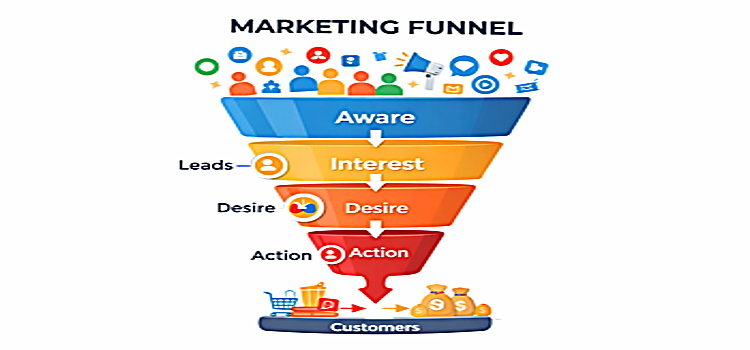
Awareness was at the top. At the top is loyalty, in the middle is thoughtfulness and conversion, and at the bottom is loyalty. Prospects were supposed to proceed smoothly from one level to the next until they became customers. It made sense on slides.
In the real world, it didn't work that way too often. Today's B2B buyers don't take complicated routes. They switch between channels, check information with more than one source, and typically make a buying decision long before they talk to a sales team. The marketing funnel hasn't changed over time. In a lot of respects, it has quietly gone away.
Why the Old Marketing Funnel Isn't Working Anymore
The traditional funnel made one simple assumption: marketers were in charge of the flow of information. Companies ran advertising, buyers read information, and sales staff helped potential customers make a choice. That dynamic has changed a lot.
B2B buyers today have access to a lot of information. Decision-makers can look at vendors without ever having to fill out a form thanks to search engines, industry communities, social media, and AI-powered research tools.
A lot of the choice has already been made by the time a buyer calls a company.
In a lot of fields, customers do more than half of their research before they even talk to a brand.
The Growth of the Self-Directed B2B Buyer
People who buy things today like to do their own research. They look for solutions, read what other people in the business have to say, compare providers, and get comments from their peers long before they talk to salespeople.
This behaviour has transformed how B2B marketing works. The process now looks more like a web of touchpoints than a controlled funnel:
Every interaction helps make the final choice. There is no one step that defines the journey.
The Modern B2B Buying Process
What does the decision-making process look like now that the funnel doesn't match reality?
A more accurate model looks like a circular loop instead of a straight line.
What This Means for Your B2B Marketing Plan
Companies need to rethink how they create demand now that the funnel model is no longer used. Modern marketing doesn't force prospects through a series of campaigns; instead, it focuses on making an impact on the whole research environment. A few tactics are becoming very important.
Gain Authority Through Insight
Companies that show they know what they're doing are trusted by decision-makers.
Publishing smart analysis, industry comments, and instructional materials makes a brand look more like a trusted adviser than a seller. High-quality content is a big reason why people want to visit your site.
Put money into search visibility
Search is still one of the best ways to find things in B2B marketing.
Companies that show up for high-intent searches, like comparisons of solutions, questions about strategy, and difficulties in the industry, get buyers right when they start looking.
Good SEO methods make sure that expertise shows up where purchasers are looking.
Make your social presence stronger
LinkedIn and other professional networks are increasingly very important for B2B decision-making. Thought leadership postings, conversations in the industry, and expert comments help people get to know you and trust you long before you start talking about sales. Visibility among peers typically affects which companies buyers think are trustworthy.
Give Evidence, Not Promises. When buyers look at vendors, proof is more important than claims.
Some strong proof points are the following:
These signals make people feel less risky and speed up the process of making decisions.
Why This Change Opens Up New Possibilities
The old funnel is going away, but the new landscape has a lot of benefits for businesses that are prepared to change. Companies that put a lot of emphasis on education, openness, and competence can sway purchasers long before competitors get involved.
They don't just compete at the end of the sales cycle; they also impact how customers think about the problem itself. And when that happens, it is frequently a lot easier to make a buying decision.
Final Thoughts
For many years, the marketing funnel worked as it should have. But B2B buyers today act in a different way. They undertake their own study, check facts with other people, and talk to vendors with strong ideas.
In this setting, visibility, trustworthiness, and constant understanding are what build influence. Companies that see this change will stop trying to push customers through a funnel. They will instead focus on something much stronger that buyers will trust as they figure things out.
Awareness was at the top. At the top is loyalty, in the middle is thoughtfulness and conversion, and at the bottom is loyalty. Prospects were supposed to proceed smoothly from one level to the next until they became customers. It made sense on slides.
In the real world, it didn't work that way too often. Today's B2B buyers don't take complicated routes. They switch between channels, check information with more than one source, and typically make a buying decision long before they talk to a sales team. The marketing funnel hasn't changed over time. In a lot of respects, it has quietly gone away.
Why the Old Marketing Funnel Isn't Working Anymore
The traditional funnel made one simple assumption: marketers were in charge of the flow of information. Companies ran advertising, buyers read information, and sales staff helped potential customers make a choice. That dynamic has changed a lot.
B2B buyers today have access to a lot of information. Decision-makers can look at vendors without ever having to fill out a form thanks to search engines, industry communities, social media, and AI-powered research tools.
A lot of the choice has already been made by the time a buyer calls a company.
In a lot of fields, customers do more than half of their research before they even talk to a brand.
The Growth of the Self-Directed B2B Buyer
People who buy things today like to do their own research. They look for solutions, read what other people in the business have to say, compare providers, and get comments from their peers long before they talk to salespeople.
This behaviour has transformed how B2B marketing works. The process now looks more like a web of touchpoints than a controlled funnel:
- Results of the search
- Posts on LinkedIn
- Blogs about the industry
- Sites that compare products
- Reviews on the internet
- Summaries made by AI
- Podcasts and webinars
Every interaction helps make the final choice. There is no one step that defines the journey.
The Modern B2B Buying Process
What does the decision-making process look like now that the funnel doesn't match reality?
A more accurate model looks like a circular loop instead of a straight line.
- 1. Recognizing the problem
A problem for the firm comes up. Leaders start to look into various solutions.
This phase frequently starts with search queries and information about the sector.
- 2. Research on your own
Buyers look for information online.
They study papers about thought leadership, look at strategies, observe talks between experts, and look at case studies. At this point, being credible is more important than promoting.
- 3. Validation by Peers
Many consumers want to hear from other people before they make a choice.
This could come from people in the same field, communities of professionals, talks on LinkedIn, reviews and comments.
Social proof makes people trust you a lot more.
- 4. Checking out the vendor
Buyers only start looking at possible sellers after they have enough information.
At this point, they usually have a short list of people in mind. Companies that established authority earlier in the research process are much more likely to be included.
- 5. Making a decision and getting everyone on the same page
There is usually more than one person making a decision when it comes to B2B purchasing. Before giving final permission, stakeholders discuss information with each other, compare recommendations, and think about how the business will be affected. Clear message and compelling proof points are quite important here.
What This Means for Your B2B Marketing Plan
Companies need to rethink how they create demand now that the funnel model is no longer used. Modern marketing doesn't force prospects through a series of campaigns; instead, it focuses on making an impact on the whole research environment. A few tactics are becoming very important.
Gain Authority Through Insight
Companies that show they know what they're doing are trusted by decision-makers.
Publishing smart analysis, industry comments, and instructional materials makes a brand look more like a trusted adviser than a seller. High-quality content is a big reason why people want to visit your site.
Put money into search visibility
Search is still one of the best ways to find things in B2B marketing.
Companies that show up for high-intent searches, like comparisons of solutions, questions about strategy, and difficulties in the industry, get buyers right when they start looking.
Good SEO methods make sure that expertise shows up where purchasers are looking.
Make your social presence stronger
LinkedIn and other professional networks are increasingly very important for B2B decision-making. Thought leadership postings, conversations in the industry, and expert comments help people get to know you and trust you long before you start talking about sales. Visibility among peers typically affects which companies buyers think are trustworthy.
Give Evidence, Not Promises. When buyers look at vendors, proof is more important than claims.
Some strong proof points are the following:
- Case studies
- Testimonials from clients
- Results based on data
- Examples from the real world
These signals make people feel less risky and speed up the process of making decisions.
Why This Change Opens Up New Possibilities
The old funnel is going away, but the new landscape has a lot of benefits for businesses that are prepared to change. Companies that put a lot of emphasis on education, openness, and competence can sway purchasers long before competitors get involved.
They don't just compete at the end of the sales cycle; they also impact how customers think about the problem itself. And when that happens, it is frequently a lot easier to make a buying decision.
Final Thoughts
For many years, the marketing funnel worked as it should have. But B2B buyers today act in a different way. They undertake their own study, check facts with other people, and talk to vendors with strong ideas.
In this setting, visibility, trustworthiness, and constant understanding are what build influence. Companies that see this change will stop trying to push customers through a funnel. They will instead focus on something much stronger that buyers will trust as they figure things out.